Visitor Flow Simulation
Research
Key Takeaways
Simulating behaviour, not just movement
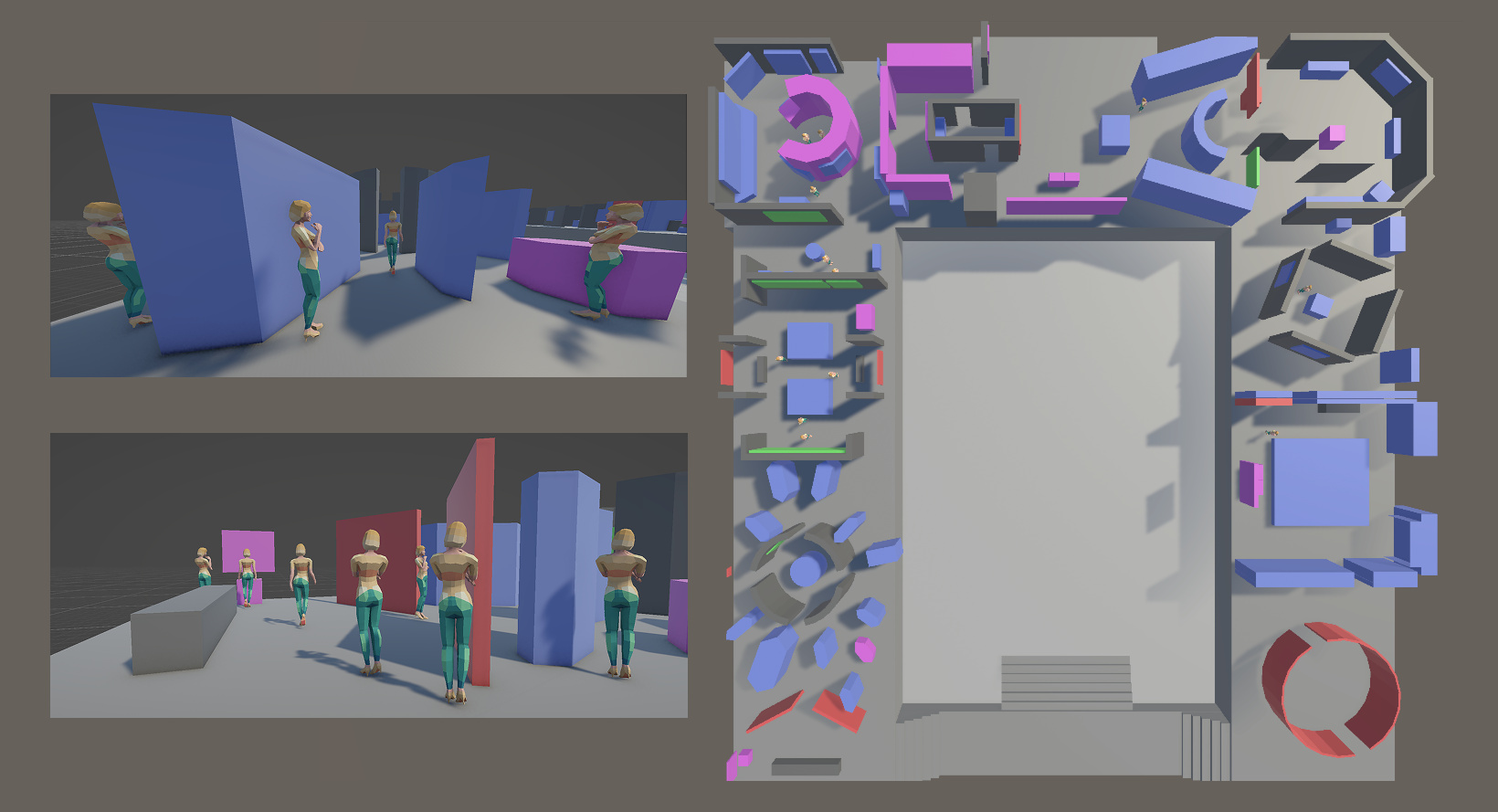
Existing visitor-flow tools model people as rational agents finding the fastest route from A to B. This project builds a simulation model where visitors move the way people actually do in a museum — curious, distractible, drawn off-course by what interests them.
A periodic table for means of transfer
Alongside the simulation itself, the research produces a first classification of a “periodic table” for means of transfer — the projections, soundscapes, objects, and interactions designers use to engage visitors — clustered by how they overlap in behaviour and flow.
Agentic AI meets visitor experience design
Built with Unity Agents, the simulation combines our own expertise in orchestrating visitor journeys with agentic AI that can model individual, autonomous behaviour at scale.
Grounded in real observation
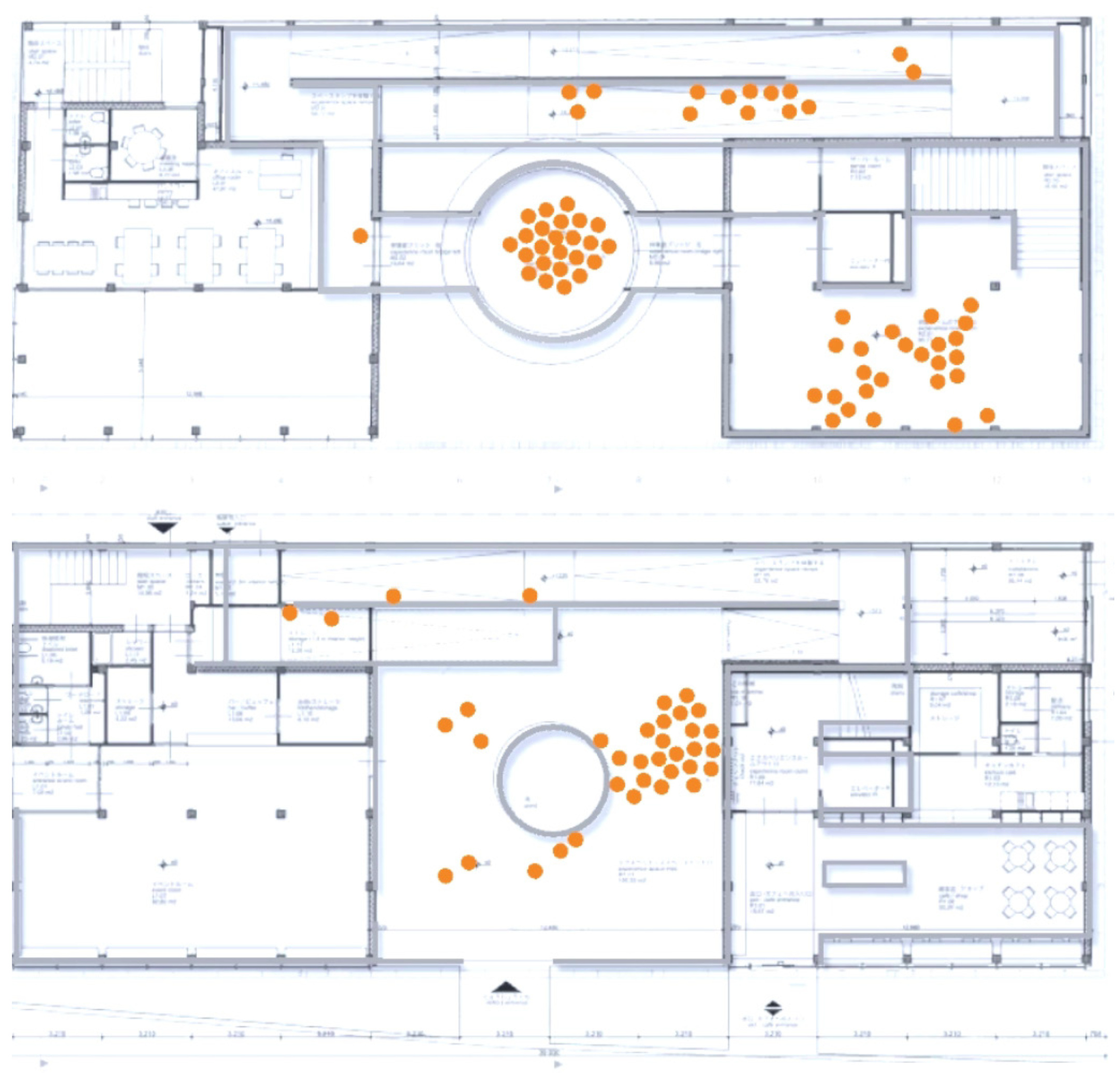
A first prototype was developed with the Wereldmuseum Amsterdam as a test location, but more places will be added. The model isn’t theoretical: it’s built on real, on-site behavioural data, so virtual visitors move the way actual visitors do.
Content-Driven Visitor Flow Simulation
State-of-the-art: agentic AI meets visitor experience
Existing simulation tools come from two worlds that were never built for museums: AI models for non-playable game characters, and mathematical agent models designed for efficient crowd movement. Both treat the visitor as a rational actor optimising a path from A to B. But a museum visit isn’t a route to be solved, it’s a journey shaped by curiosity, emotion, and distraction. This project combines our own expertise in designing visitor journeys and the emotional pacing of an experience with agentic AI capable of simulating autonomous, individual behaviour at scale. Using agents not to automate the visitor experience, but to model it with the nuance it actually requires.
Towards a periodic table of means of transfer
A visitor experience is built from countless means of transfer — projections, soundscapes, object displays, interactive panels, routing, seating — each shaping behaviour differently: some spread visitors out, some slow them down, some draw a crowd. Until now, choosing and combining these tools has depended almost entirely on individual designers’ experience and instinct. Part of this research is to change that, by systematically identifying and classifying these means of transfer according to how they influence visitor behaviour and flow. A first step toward something like a periodic table: a shared reference that maps what each tool does, and how it can be combined with others. This isn’t only useful for simulation. A shared classification like this could give the entire cultural and museum sector a common language for designing visitor experiences.
Built by students, grounded in the field
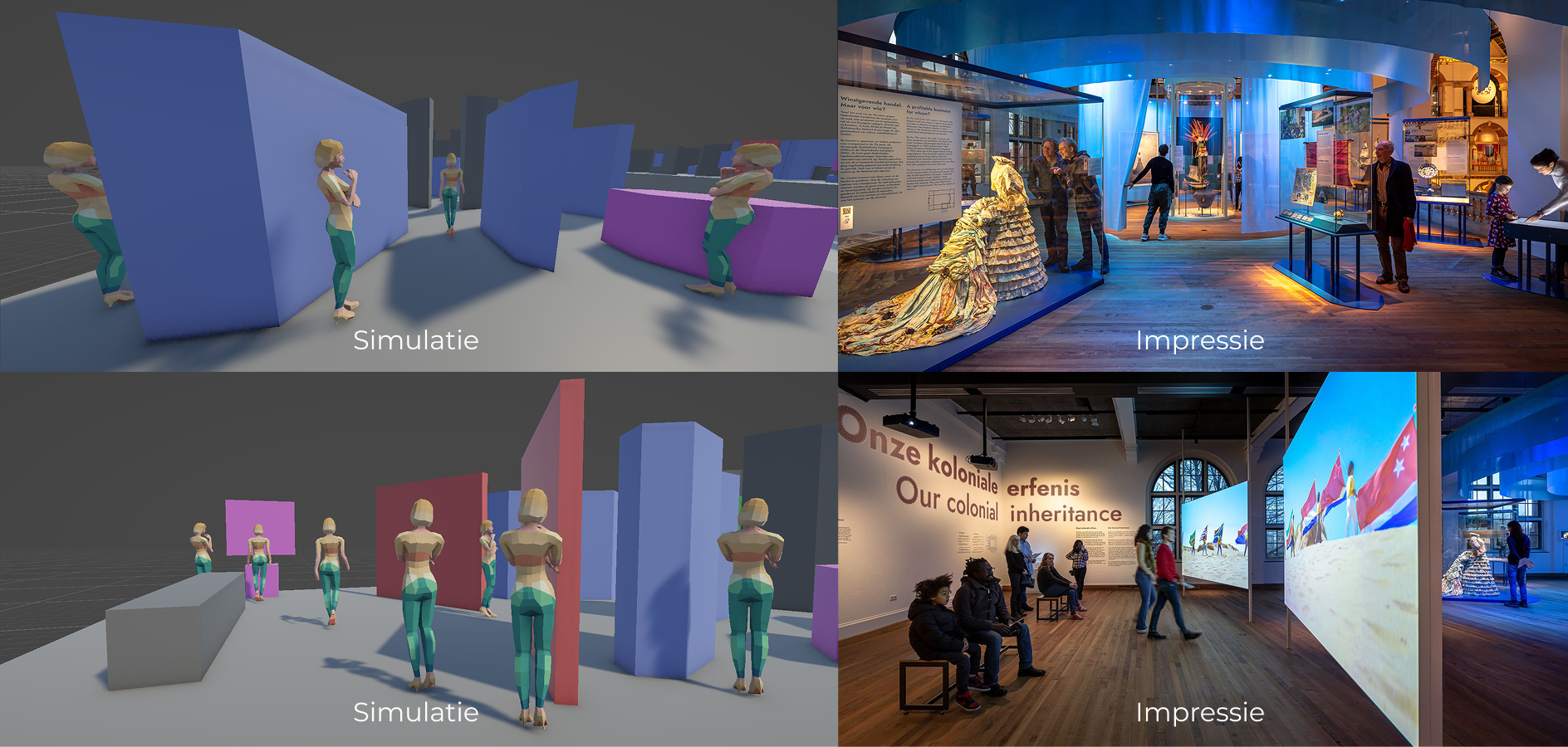
A team of second-year students turned a first version of this model into a working prototype. Using Unity Agents and Blender, they reconstructed the Wereldmuseum’s “De Erfenis” exhibition space and populated it with virtual visitors — but their real contribution was in the fieldwork behind it. They designed and carried out their own on-site observations, defining variables to capture how visitors actually moved and behaved, and used that data to drive the simulation. The result: a prototype where virtual visitors move the way real ones did.