Digital Names Monument of the Enslaved

Visitor Journey / Interactive Installations / Research

Key Takeaways

lijstje van dingen

Making absence visible through a living memorial

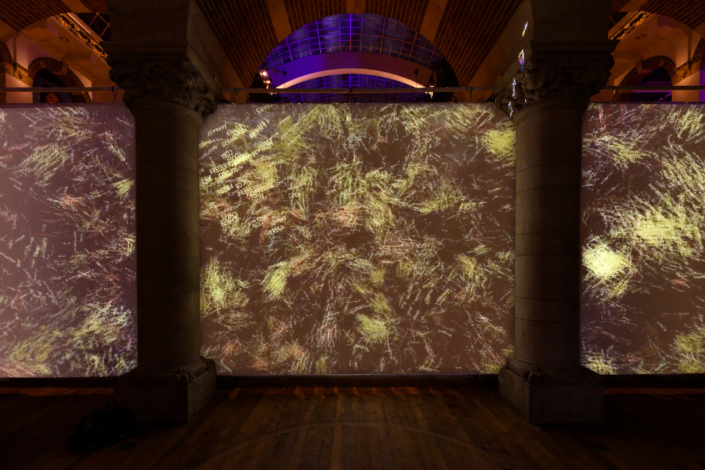
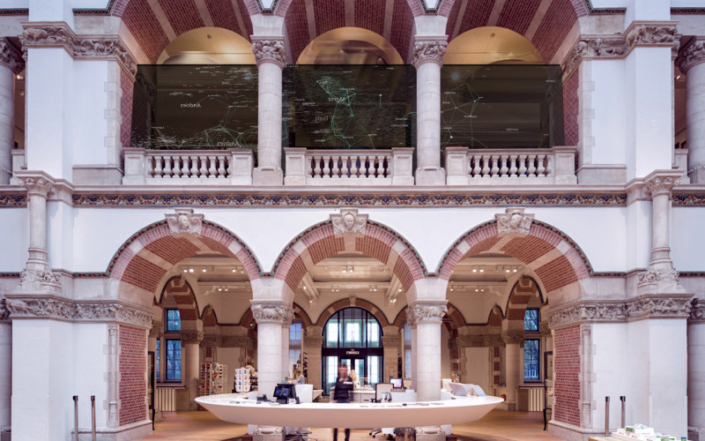
For the permanent exhibition Our Colonial Inheritance at the Tropenmuseum, we were invited to develop the Digital Names Monument: an evolving memorial dedicated to people enslaved in Suriname, Curaçao and the former Dutch East Indies. Working closely with the museum and historians, we transformed decades of archival research into an experience that invites visitors not only to explore history, but to remember the people behind it.

Rather than presenting an archive as a database, we designed a monument that continues to grow as new historical research becomes available. Every newly discovered name, story and relationship becomes part of a living archive that restores connections history attempted to erase.
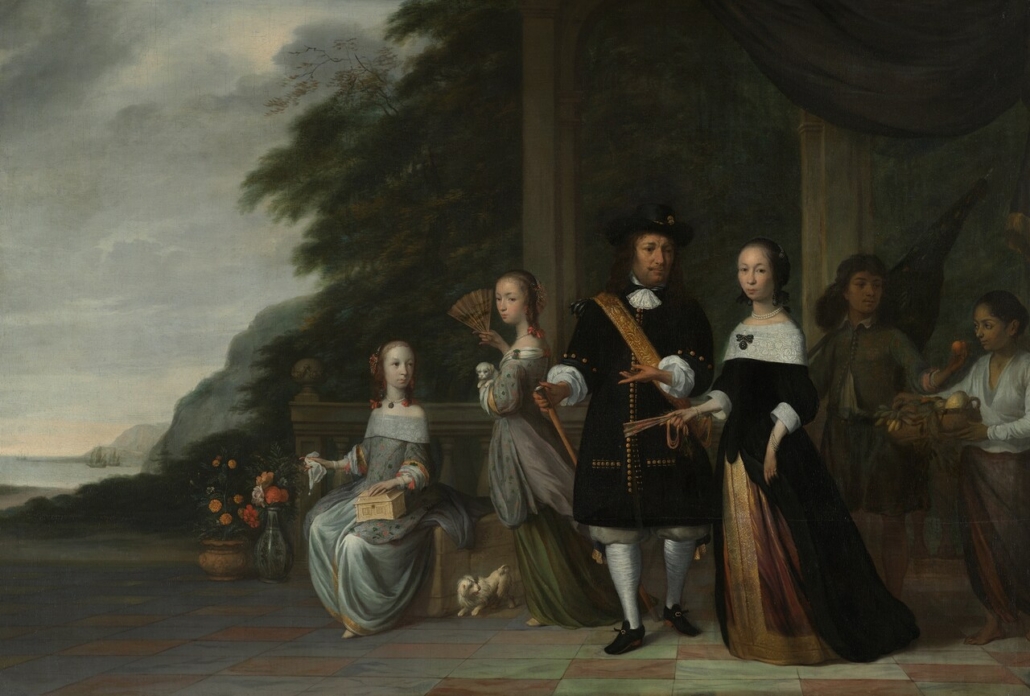
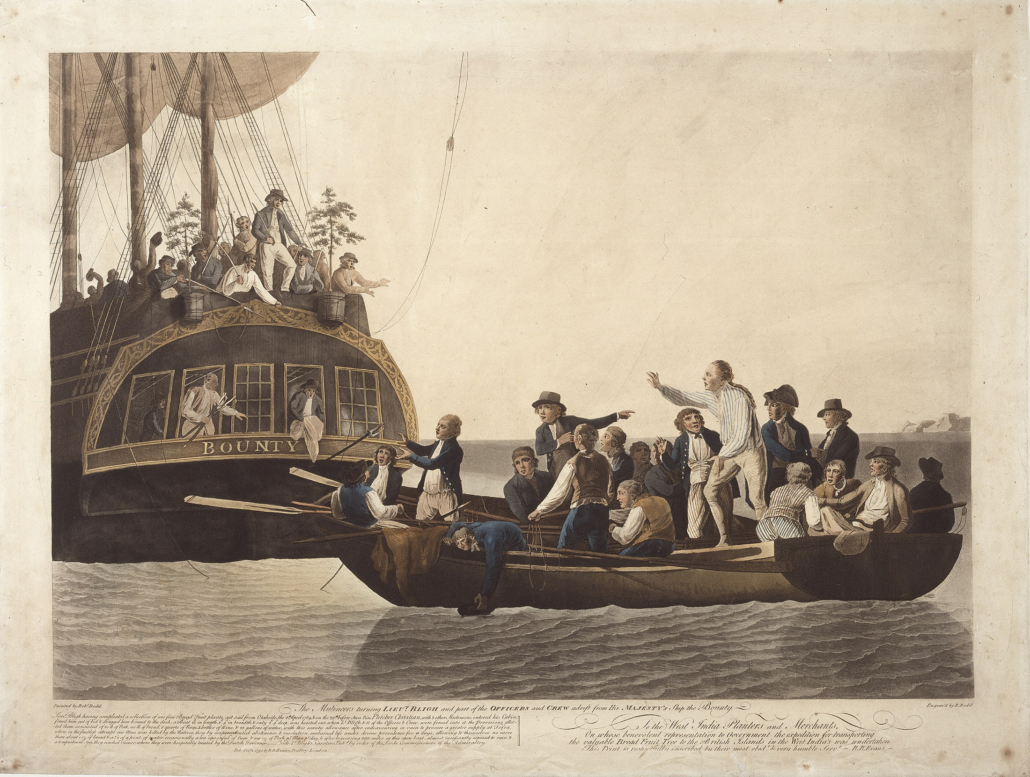
Pieter Cnoll, Cornelia van Nijenrode en hun dochters. Jacob Coeman, 1665. Op de achtergrond staan twee tot slaaf gemaakten. Rijksmuseum

Designing for Absence

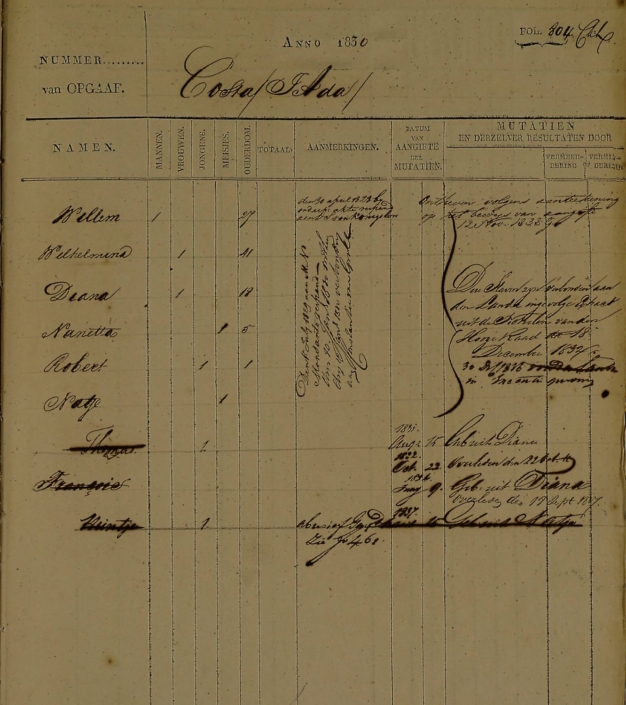
Historical archives are profoundly incomplete. While detailed records exist for many colonial administrators and VOC employees, only a fraction of the names of enslaved people have survived. Of the estimated one to two million people enslaved under Dutch colonial rule, fewer than 200,000 are currently documented.

Rather than attempting to reconstruct what has been lost, the monument acknowledges that loss. Every known name is given a place, surrounded by the empty space left by the countless names that colonial records failed, and refused, to preserve. In doing so, the monument remembers not only those we know, but also those whose identities were erased.
Learning Through New Perspectives

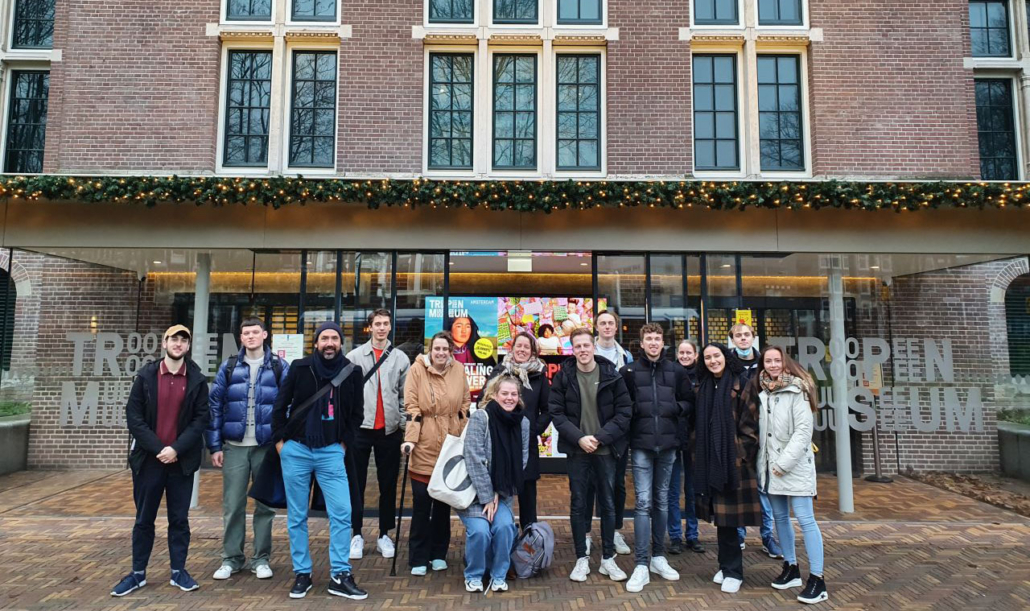
During the early design phase, students from the Data Visualization minor at the Amsterdam University of Applied Sciences explored alternative ways of representing this history. Their concepts do not appear directly in the final installation, but many of their questions and ideas challenged our own assumptions and helped shape the foundations of the monument. Not as an afterthought but right at the start of the project.

Visualising Social Connections

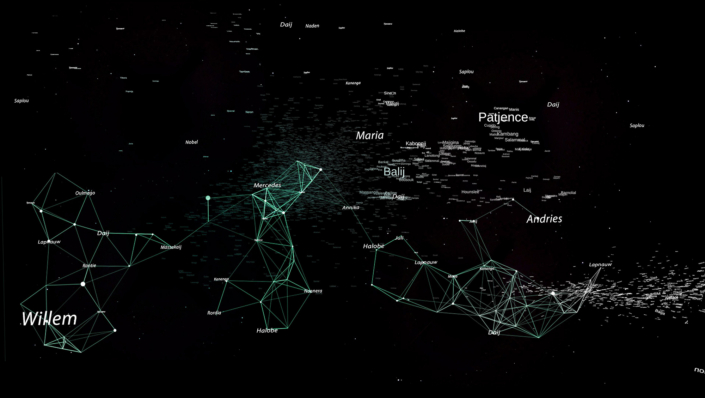
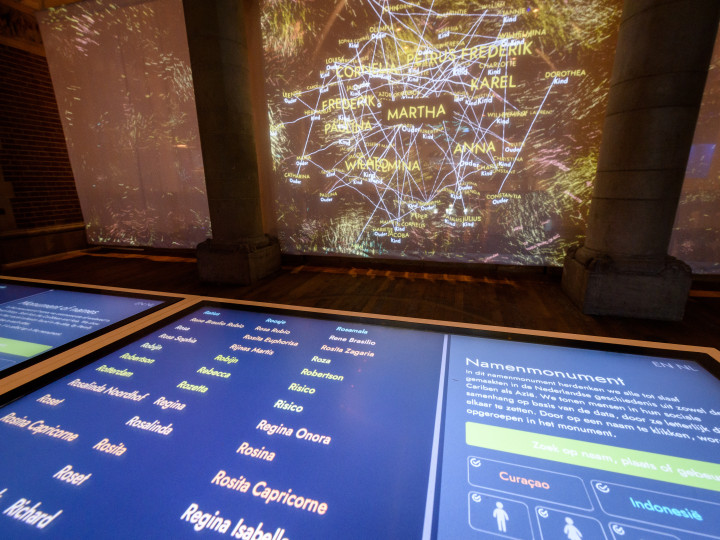
Traditional names monuments present people as isolated names, often organised alphabetically. We chose a different approach. People rarely exist in isolation. They belong to families, communities and shared histories. Even under slavery, relationships endured.

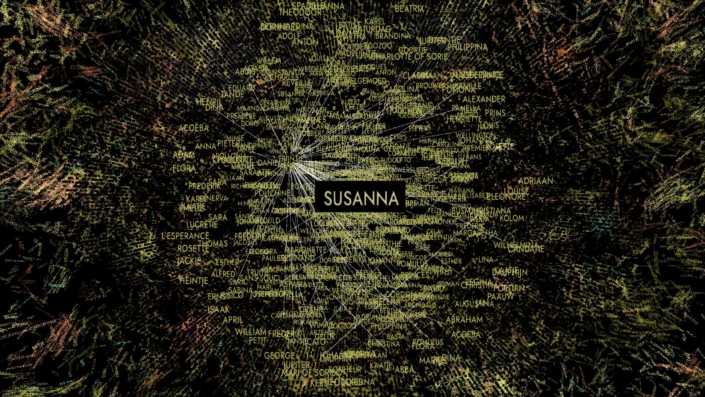
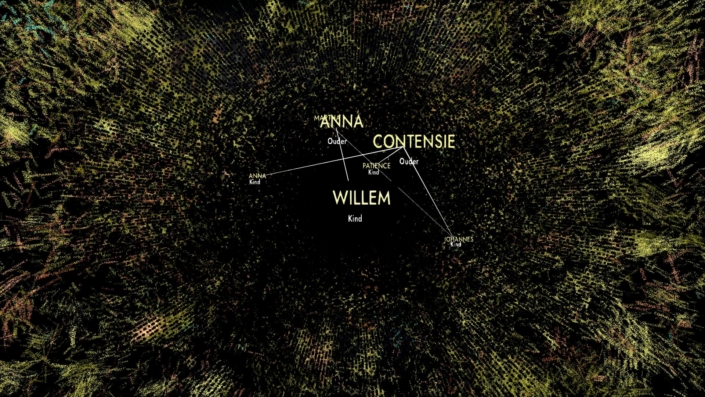
Using historical records, the monument reconstructs social connections wherever possible. Parents and children, people living on the same plantation, individuals sold together, or those sharing a place and time gradually form interconnected constellations. Rather than visualising data alone, the installation visualises a social fabric.

Different stages of designing the visualisation in this clip.

Doing our part

Historical research continues long after a monument is built. As part of the project, we developed an AI model to help identify people who appear both in enslaved registers and in manumission records, the documents recording people who were freed from slavery and often chose a family name for the first time.

Some of these identities only emerge through more than one record. A person could appear several times in the enslaved registers, under the same owner or different ones, before the trail finally leads to the name they were free to choose for themselves.

While the system could only establish a fraction of these connections with sufficient confidence, every verified match helped extend existing family histories. For some descendants, it opened a path to relatives and identities that had previously been lost to history.

Exploring Lives Beyond the Archive

Two interactive touchscreens invite visitors to search through the complete archive of documented names. Selecting a person reveals the historical information available about them while simultaneously highlighting their relationships across the projected landscape.

As visitors explore, an overwhelming sea of names gradually transforms into individual human lives embedded within families, communities and shared experiences.

From Names to Human Lives

Alongside hundreds of thousands of documented names, a curated collection of personal stories creates moments of intimacy within the larger monument. Historical documents, photographs and archival sources provide context for individual lives, reminding visitors that every name belonged to someone with relationships, memories, hopes and dreams.

By moving between the immense scale of the archive and the intimacy of individual stories, visitors experience both the magnitude of slavery and the humanity of the people within it.